Hume Band vs Heart Rate Monitor – Which Is Better in 2026?
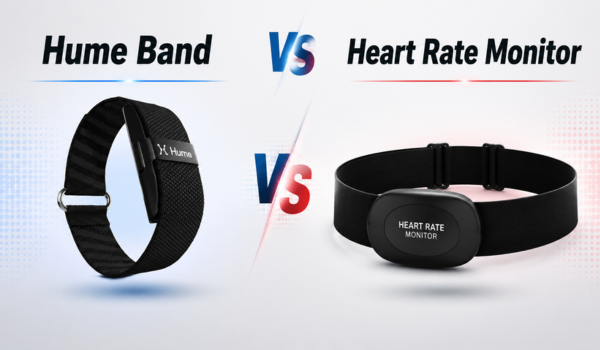
Hume Band vs Heart Rate Monitor is a comparison between two health-focused solutions designed to help users monitor their cardiovascular health, fitness, and overall wellness.
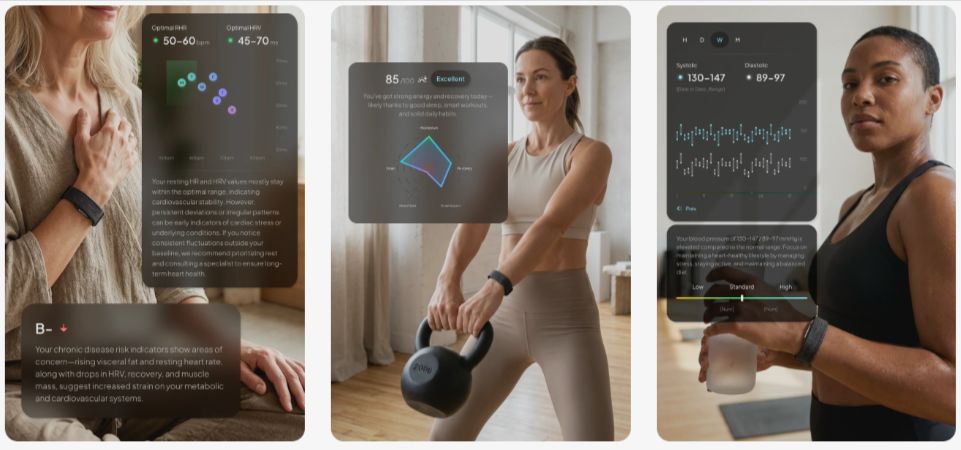
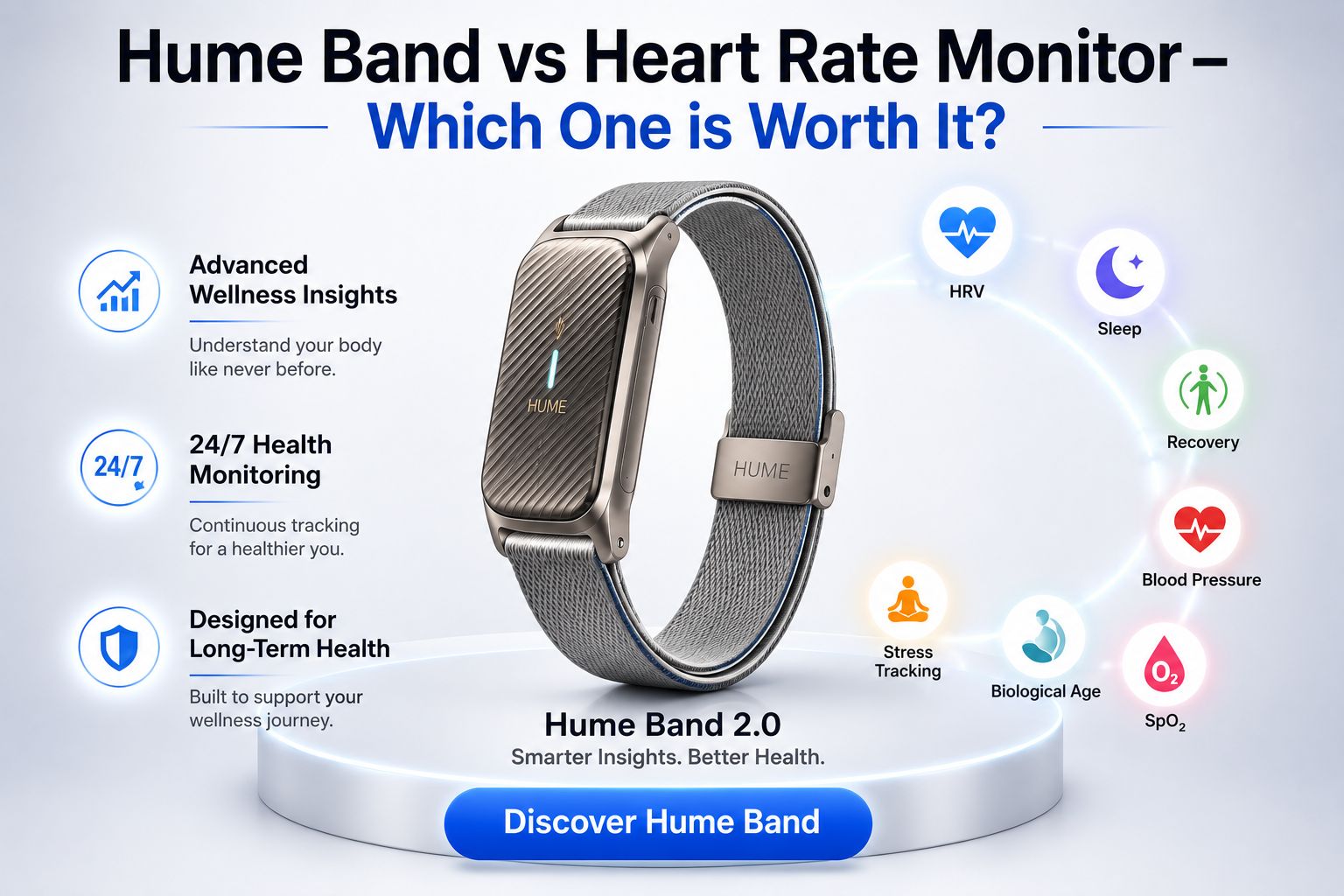
Hume Band is a screen-free wearable that continuously tracks HRV, heart rate, blood pressure insights, SpO₂, sleep quality, stress, recovery, biological age, and metabolic health through the Hume Health app.
A traditional Heart Rate Monitor, on the other hand, primarily measures heart rate during workouts and physical activities to help users optimize training intensity and improve cardiovascular fitness.
Comparing their tracking capabilities, health insights, battery performance, comfort, and overall user experience helps users choose the option that best suits their health and fitness goals.
Hume Band vs Heart Rate Monitor
| Feature | Hume Band | Heart Rate Monitor |
|---|---|---|
| Rating | 4.8/5 | 4.5/5 |
| Health Features | HRV tracking, sleep monitoring, stress tracking, recovery insights, blood pressure insights, SpO₂ monitoring, Biological Age, Metabolic Momentum, Metabolic Capacity, Pace of Aging | Continuous heart rate monitoring, workout heart rate zones, calorie estimation, exercise intensity tracking |
| Weight | Lightweight screen-free wearable designed for comfortable 24/7 use | Varies by model; chest straps are lightweight, while wrist monitors vary in size |
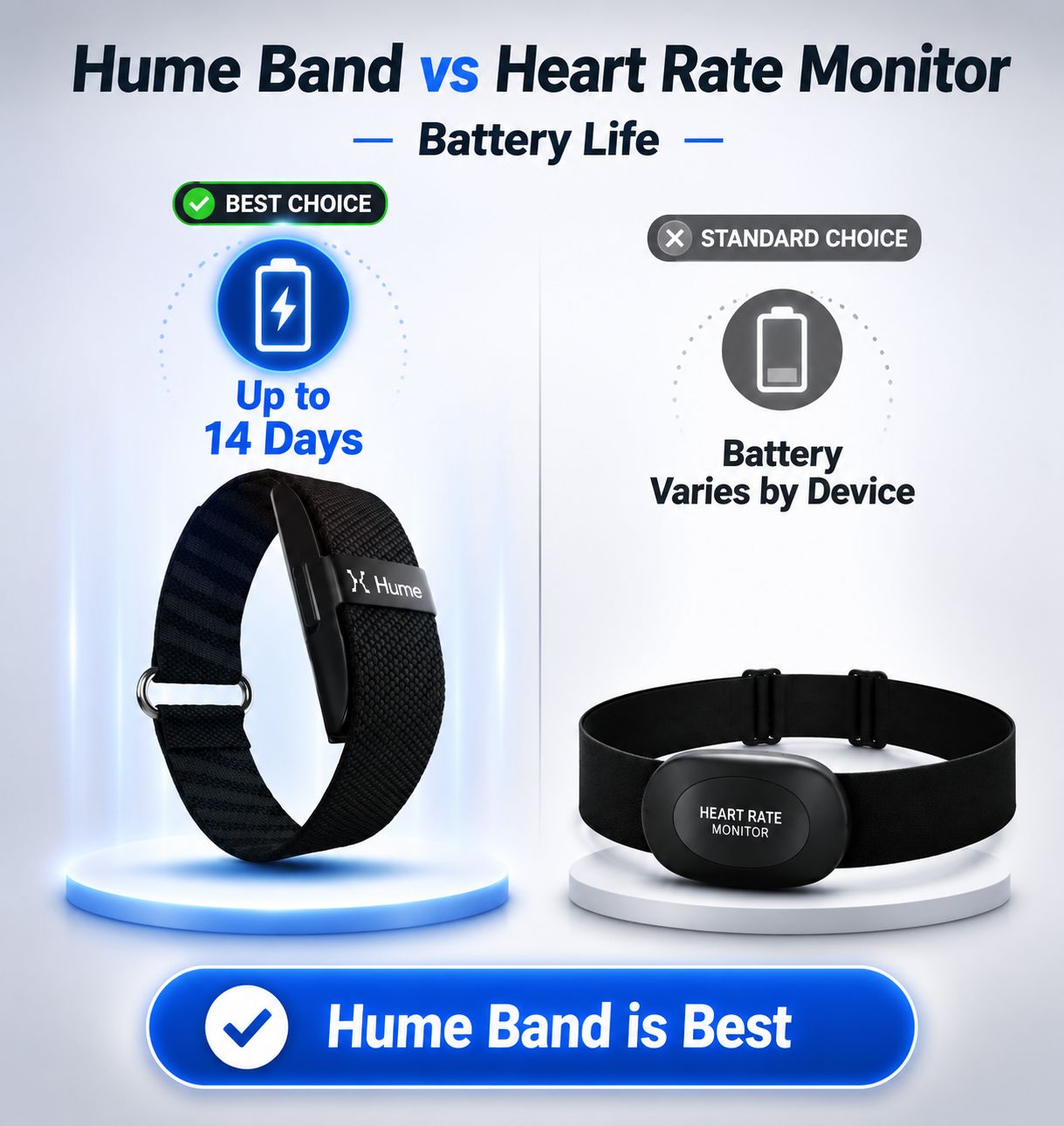
| Battery Life | Up to 14 days | Varies by device, typically 20 hours to 1 year, depending on model |
| GPS | ❌ No built-in GPS | ❌ Most standalone heart rate monitors do not include GPS |
| Mobile App | Hume Health App | Manufacturer’s companion app (varies by brand) |
| Subscription Cost | None required for core health tracking features | Usually, no subscription is required |
| Price Range | $199–$249 (Click Here) | Approximately $30–$150, depending on brand and features |
| What We Liked | • Advanced recovery insights • Long battery life • Blood pressure insights • Sleep tracking • Metabolic health metrics • Personalized health coaching • No subscription required | • Accurate workout heart rate tracking • Lightweight • Great for exercise • Easy to pair with fitness devices • Affordable options available |
| What We Didn’t Like | • No smartwatch notifications • No built-in GPS • Limited smartwatch functions | • Limited wellness tracking • No sleep recovery analysis on most models • Few lifestyle insights • No biological age or metabolic tracking |
Hume Band is best for users seeking complete health tracking, recovery monitoring, sleep analysis, stress management, and long-term wellness insights beyond simple heart rate monitoring.
Hume Band vs Heart Rate Monitor – Quick Overview
What is Hume Band?
Hume Band is an advanced screen-free health wearable designed for continuous wellness monitoring throughout the day and night.
It continuously tracks heart rate variability (HRV), heart rate, blood oxygen (SpO₂), blood pressure insights, skin temperature, stress, sleep quality, recovery, biological age, and metabolic health.
Through the Hume Health app, users receive personalized recommendations, health trends, recovery guidance, and longevity-focused insights that help improve daily habits and overall well-being.
Its lightweight design, comfortable fit, and up to 14-day battery life make it ideal for uninterrupted health monitoring.
What is a Heart Rate Monitor?
A Heart Rate Monitor is a fitness device designed primarily to measure heart rate during exercise and daily activities.
These devices are commonly available as chest straps or wrist-based monitors and help users maintain target heart rate zones during workouts.
Many heart rate monitors also estimate calories burned, monitor exercise intensity, and sync with fitness apps or sports watches for training analysis.
Unlike advanced wellness wearables, traditional heart rate monitors mainly focus on cardiovascular performance rather than complete health monitoring.
Hume Band vs Heart Rate Monitor – Features
Hume Band Features
- Advanced Recovery Tracking: Continuously monitors HRV, heart rate, recovery status, daily strain, and readiness to help users understand how well their body has recovered from exercise and daily stress.
- Blood Pressure Insights: Provides daily blood pressure trend insights without requiring a traditional cuff, helping users monitor cardiovascular wellness over time.
- Sleep Monitoring: Tracks sleep duration, REM sleep, deep sleep, light sleep, and overnight recovery to provide a detailed analysis of sleep quality and personalized improvement recommendations.
- Metabolic Health Insights: Offers exclusive Metabolic Momentum and Metabolic Capacity metrics that help users understand long-term health trends and healthy aging.
- Stress Tracking: Monitors physiological stress throughout the day using multiple biomarkers and provides guidance to improve recovery and overall well-being.
- Personalized Health Coaching: The Hume Health app analyzes collected health data and provides personalized recommendations to improve sleep, recovery, energy levels, and overall long-term health.
Heart Rate Monitor Features
- Continuous Heart Rate Monitoring: Measures heart rate continuously during workouts and daily activities to help users maintain appropriate exercise intensity.
- Heart Rate Zones: Displays training zones that help users optimize fat burning, endurance training, cardiovascular conditioning, and athletic performance.
- Workout Tracking: Records exercise sessions while providing accurate heart rate data for walking, running, cycling, rowing, strength training, and other workouts.
- Calorie Burn Estimation: Uses heart rate information to estimate calories burned during physical activity and workouts.
- Device Compatibility: Pairs with smartphones, fitness watches, cycling computers, and fitness equipment using Bluetooth or ANT+ technology, depending on the model.
- Lightweight Exercise Design: Designed to remain secure during high-intensity workouts while providing accurate heart rate measurements.

Hume Band vs Heart Rate Monitor – Benefits
Hume Band Benefits
- Improves Overall Health Awareness: Tracks HRV, blood pressure insights, sleep, recovery, stress, biological age, and metabolic health to provide a complete understanding of daily wellness.
- Supports Long-Term Wellness: Helps users build healthier habits using personalized insights focused on improving longevity and reducing long-term health risks.
- Enhances Recovery: Recovery scores, strain analysis, and HRV monitoring help users balance exercise, work, and rest more effectively.
- Better Sleep Quality: Detailed sleep analysis helps users improve bedtime routines, recovery, and overall daily energy levels.
- Comfortable 24/7 Monitoring: The lightweight screen-free design makes continuous day and night health tracking comfortable without unnecessary distractions.
- Personalized Health Guidance: The companion app delivers actionable recommendations based on changing health trends, helping users make smarter lifestyle decisions.
Heart Rate Monitor Benefits
- Improves Workout Performance: Provides accurate heart rate data that helps users train more efficiently and maintain ideal exercise intensity.
- Supports Cardiovascular Fitness: Monitoring heart rate during exercise helps improve endurance, aerobic fitness, and overall heart health.
- Helps Prevent Overtraining: Real-time heart rate feedback allows users to avoid excessive workout intensity and improve recovery between training sessions.
- Easy Exercise Tracking: Records heart rate during workouts and integrates with many popular fitness apps and sports watches.
- Lightweight and Comfortable: Most heart rate monitors are designed for comfort during running, cycling, gym workouts, and other physical activities.
- Affordable Fitness Solution: Traditional heart rate monitors are available at a wide range of prices, making them accessible for beginners and experienced athletes alike.