Honey and Baking Soda Trick: Myths, Facts & Benefits
Honey and Baking Soda Trick: Exploring Its Potential Benefits for Digestive Comfort, Throat Soothing, Skin Care, and Everyday Wellness

The Honey and Baking Soda Trick has become a popular topic among people interested in natural home remedies, digestive comfort, skin care, and everyday wellness. This simple combination brings together two familiar household ingredients used separately for generations.
Honey is appreciated for its natural sweetness, soothing properties, and antioxidant content. Baking soda, also known as sodium bicarbonate, is widely recognized for its role in cooking, cleaning, and certain medical applications.
But what happens when these two ingredients are combined?
Online discussions suggest that the honey and baking soda mixture may offer benefits ranging from digestive comfort to healthier-looking skin. Some claims even describe it as a natural solution for inflammation, body detoxification, and improved energy.
While these ideas have attracted considerable attention, understanding the individual properties of honey and baking soda is essential before trying the combination.
In this comprehensive guide, we’ll explore what the Honey and Baking Soda Trick involves, why it has become popular, its potential uses, preparation methods, safety considerations, and what scientific research says about these familiar ingredients.
What Is the Honey and Baking Soda Trick?
The Honey and Baking Soda Trick refers to a homemade combination of natural honey and baking soda, sometimes mixed with water or other ingredients.
People interested in this remedy often use it as part of a broader home wellness approach. Depending on how it’s prepared, people may discuss the mixture in connection with digestive health, skin care, oral hygiene, and general comfort.
The idea is straightforward: honey provides natural sweetness and several plant-derived substances, while baking soda has alkaline properties that can neutralize acids under certain conditions.
These distinct characteristics have encouraged curiosity about how the ingredients might work together. However, combining them does not necessarily enhance their individual properties or create new therapeutic benefits.
Understanding the intended use is important because applying a mixture to the skin differs significantly from swallowing it.
For example, baking soda can be useful in cooking and as an ingredient in certain antacid medicines, but regularly drinking homemade baking soda mixtures can create health risks.
Similarly, honey can soothe an irritated throat, but its benefits don’t automatically extend to every condition mentioned in online wellness discussions.
Why Is the Honey and Baking Soda Trick Becoming Popular?
Interest in simple household remedies continues to grow as people look for affordable, accessible ways to support their health. The Honey and Baking Soda Trick appeals to this curiosity for several reasons.
1. Both Ingredients Are Easy to Find
Honey and baking soda are common household products available in most grocery stores. Their accessibility makes them attractive to people who enjoy learning about traditional remedies and home wellness practices.
2. Honey Has a Long History of Traditional Use
Honey has been used in food preparation and traditional health practices for centuries. Its familiar taste, soothing texture, and natural origin contribute to its popularity.
3. Baking Soda Has Multiple Practical Applications
Baking soda is known for its versatility. It can help baked goods rise, neutralize certain odors, and serve as an ingredient in specific medicinal preparations. Its ability to react with acids has also contributed to interest in digestive applications.
4. Social Media Encourages Curiosity
Short videos and online articles frequently introduce simple ingredient combinations as wellness discoveries. The honey and baking soda mixture fits this format because it is visually simple and easy to explain. Nevertheless, viral popularity should not be confused with demonstrated medical effectiveness.

Understanding Honey: A Naturally Sweet Ingredient With Interesting Properties
Honey is much more than a natural sweetener. Honeybees produce honey from flower nectar, and it contains carbohydrates, small amounts of minerals, organic acids, and various plant-derived substances.
Its exact composition depends on the flowers bees visit, environmental conditions, and processing methods.
Natural Antioxidant Content
Honey contains different antioxidant substances, including certain phenolic acids and flavonoids. Antioxidants are involved in protecting cells from oxidative stress, a process associated with normal metabolism and environmental exposure.
The amount and type of antioxidants vary considerably between honey varieties. Honey can add variety to a diet, but it should not be treated as a concentrated replacement for antioxidant-rich fruits and vegetables.
Soothing Throat Comfort
One of honey’s most familiar uses involves soothing an irritated throat. Its thick texture can temporarily coat the throat, making swallowing feel more comfortable.
Honey may also help reduce coughing associated with uncomplicated upper respiratory infections. For adults and children older than one year, honey in a warm drink can be a reasonable option for occasional cough-related discomfort.
Natural Energy Source
Honey contains naturally occurring sugars, primarily fructose and glucose. These carbohydrates provide energy that the body can use during daily activities.
For this reason, honey is sometimes included in snacks, beverages, and pre-exercise foods. Although honey is a natural product, it remains a source of added sugar when used to sweeten foods and drinks.
Moderation is important.
Understanding Baking Soda: What Makes It Different?
Baking soda is the common name for sodium bicarbonate, a white crystalline powder with alkaline properties. It has several recognized uses in cooking, household maintenance, and medicine.
Acid-Neutralizing Properties
Baking soda reacts with acids through a chemical process that produces water, carbon dioxide, and other reaction products. This characteristic explains why sodium bicarbonate is included in some antacid preparations.
When used appropriately in a medicinal product, sodium bicarbonate can temporarily relieve certain symptoms of heartburn or acid indigestion.
However, its sodium content and potential effects on the body’s acid-base balance make unsupervised frequent consumption unsuitable.
Household Uses
Baking soda is also useful for:
-
Helping baked goods rise.
-
Neutralizing certain household odors.
-
Cleaning some kitchen surfaces.
-
Removing light residue from suitable materials.
-
Supporting particular food preparation techniques.
These practical uses are well established, but they should be considered separately from proposed health benefits.
Why Its Alkaline Nature Attracts Attention
Some wellness discussions suggest that consuming baking soda can make the entire body more alkaline.
In reality, the body carefully regulates blood pH through several physiological systems, particularly the lungs and kidneys.
Changing the acidity of the stomach temporarily does not mean a person has improved their overall health or corrected their body’s pH balance.
Potential Benefits Associated With the Honey and Baking Soda Trick
The proposed advantages of this popular combination are best understood by examining what each ingredient can do individually.
1. Digestive Comfort
Digestive wellness is one of the most common reasons people look into the Honey and Baking Soda Trick. Baking soda has established acid-neutralizing properties and is an ingredient in certain antacid medicines.
Honey, meanwhile, is a familiar food that some people enjoy in warm beverages. However, there is no established advantage to combining honey with baking soda for indigestion instead of using an appropriately formulated antacid when needed.
People experiencing frequent heartburn should seek medical guidance because persistent symptoms may indicate an underlying condition.
2. Throat Soothing
Honey may provide temporary comfort when the throat feels irritated. Its naturally thick consistency makes it useful in warm drinks, especially during periods of seasonal coughing.
Baking soda is not necessary for this benefit. A simple honey-and-water preparation is generally a more appropriate choice for throat comfort than drinking a homemade baking soda mixture.
3. Skin Care Interest
Honey is used in some cosmetic formulations because of its texture and moisture-retaining characteristics. Baking soda also appears in certain household skin-care discussions.
Nevertheless, baking soda’s alkalinity can disrupt the skin’s naturally acidic surface, potentially leading to dryness, redness, or irritation.
A homemade honey-and-baking-soda paste is therefore not an ideal facial treatment, particularly for sensitive skin. For skin care, properly formulated products are preferable.
4. Everyday Wellness Routines
Honey can be incorporated into a balanced eating pattern as an occasional sweetener. For instance, it can be added to oatmeal, yogurt, or warm tea.
These simple uses offer an enjoyable way to include honey without relying on untested remedies. Baking soda can remain useful in food preparation and other intended applications.
The key is recognizing that both ingredients can be valuable without needing to consume them together.
Popular Honey and Baking Soda Trick Recipes
Different online versions of this trending remedy use slightly different ingredients and preparation methods. The following examples distinguish practical food uses from mixtures that deserve caution.
Recipe 1: Honey and Warm Water for Throat Comfort
Ingredients
-
1 cup of comfortably warm water
-
1 teaspoon of honey
-
A small squeeze of lemon, if desired
Preparation:
-
Pour warm water into a cup.
-
Stir in the honey until dissolved.
-
Add lemon if preferred.
-
Sip slowly.
This simple preparation focuses on honey’s familiar soothing properties without requiring baking soda. It may help with mild throat irritation associated with an uncomplicated cold.
Recipe 2: Honey and Baking Soda in Home Baking
Ingredients:
-
Honey
-
Baking soda
-
Flour
-
Other ingredients required by your chosen baking recipe
Preparation:
Follow an established baking recipe that uses honey and baking soda in measured amounts. Honey contributes sweetness and moisture, while baking soda helps create the chemical reactions needed for a light texture.
This is one of the most practical ways to use both ingredients together.
Recipe 3: Honey and Baking Soda Drink
Some trending recipes recommend dissolving baking soda in water and adding honey before drinking. Although this preparation is frequently discussed online, it is not a standardized wellness treatment.
Regular consumption can introduce excess sodium and may interfere with certain medicines or health conditions.
For this reason, do not use a homemade baking soda drink as a daily health routine. Anyone considering sodium bicarbonate for acid indigestion should follow medical guidance or antacid label instructions.
Recipe 4: Honey and Baking Soda Skin Paste
Another popular version involves combining honey and baking soda into a thick paste for topical application.
This preparation is sometimes described as an exfoliating mask. However, baking soda can irritate the skin and interfere with its protective barrier.
People seeking exfoliation or hydration are better served by gentle skin-care products designed for their skin type.

Can Honey and Baking Soda Help With Weight Management?
Weight management is another topic sometimes associated with the Honey and Baking Soda Trick. Some discussions suggest that the mixture may accelerate metabolism or promote fat burning.
Neither ingredient has been shown to produce meaningful weight loss simply by mixing them. Honey contains calories and natural sugars, while baking soda is not a weight-loss ingredient.
Sustainable weight management typically involves a combination of nutritious eating, regular physical activity, adequate sleep, and, when appropriate, individualized guidance.
Replacing high-sugar beverages with water and emphasizing fiber-rich foods can make a more meaningful difference than experimenting with homemade alkaline drinks.
Important Safety Considerations
Although honey and baking soda are familiar household ingredients, using them for health purposes requires care.
Avoid Excessive Baking Soda Consumption
Large amounts of sodium bicarbonate can cause serious problems, including changes in blood chemistry and electrolyte balance.
Frequent use may be especially concerning for people with high blood pressure, kidney disease, heart conditions, or sodium restrictions.
Consider Medication Interactions
Sodium bicarbonate can affect the absorption or action of certain medications. People taking prescription medicines should seek professional advice before using it as an antacid.
Remember That Honey Contains Sugar
Honey can fit into a balanced diet, but portion sizes matter. People managing diabetes or monitoring carbohydrate intake should account for its sugar content.
Never Give Honey to Infants
Children younger than 12 months should not consume honey because of the risk of infant botulism.
Be Careful With Skin Applications
Baking soda may dry out or irritate skin. Avoid using homemade mixtures on broken, inflamed, or sensitive skin.
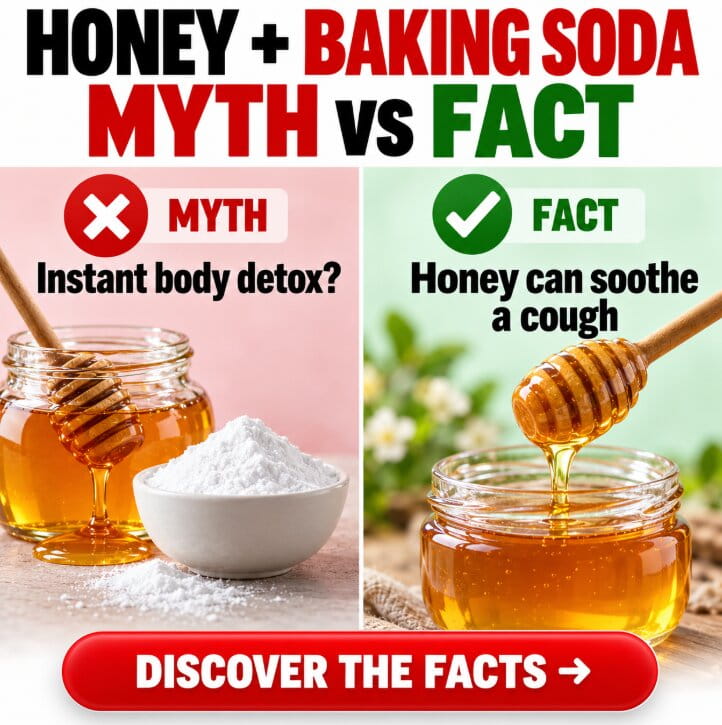
Honey and Baking Soda Trick: Myths vs. Facts
The popularity of this combination has encouraged several claims that deserve closer examination.
| Popular Claim | What You Should Know |
|---|---|
| Honey and baking soda detoxify the body | The liver and kidneys perform the body’s main waste-processing functions. |
| The mixture balances the body’s pH | Blood pH is tightly regulated by normal physiological processes. |
| Honey supports throat comfort | Honey may temporarily soothe throat irritation and reduce some cough symptoms. |
| Baking soda helps with acid indigestion | Sodium bicarbonate is an established antacid ingredient when used appropriately. |
| The mixture improves skin health | Baking soda can irritate the skin, especially with repeated application. |
| Taking both ingredients increases energy | Honey provides carbohydrates, but the combination has no established special energy-enhancing effect. |
Understanding these distinctions makes it easier to choose sensible wellness habits while avoiding unrealistic expectations.
Healthier Ways to Include Honey in Your Daily Routine
Instead of relying on a viral remedy, consider simple, enjoyable ways to add honey to everyday meals.
Morning Oatmeal: Add a small amount of honey to oatmeal with berries, nuts, and seeds for a flavorful breakfast.
Warm Herbal Tea: Stir honey into comfortably warm tea when you want something soothing.
Greek Yogurt: Combine plain yogurt, honey, and fresh fruit for a satisfying snack.
Homemade Salad Dressing: Mix a little honey with olive oil, mustard, and lemon juice.
Post-Exercise Snack: Enjoy honey in a carbohydrate-containing snack alongside a protein source after physical activity.
These options emphasize nutrition, variety, and practical food choices.
Final Verdict: Is the Honey and Baking Soda Trick Worth Exploring?
The Honey and Baking Soda Trick highlights the continuing interest in simple household ingredients and traditional wellness practices.
Honey offers appealing nutritional and practical benefits, including natural sweetness, antioxidant properties, and temporary throat-soothing relief.
Baking soda also has established applications in cooking, household maintenance, and certain antacid preparations.
Both ingredients are useful in their own ways.
The important distinction is that their individual benefits do not automatically become stronger when they are combined.
For everyday wellness, enjoying honey in moderation as part of a varied diet is a practical approach. Baking soda is best reserved for appropriate culinary, household, or medically directed uses.
Rather than expecting one homemade mixture to transform your health, focus on consistent habits that support digestion, hydration, balanced nutrition, and overall well-being.
Ultimately, the most valuable lesson behind this trending trick is simple: familiar natural ingredients can be useful, but knowing how to use them safely makes all the difference.
.