How to Wear Your Hume Band on Your Wrist? Easy Guide!
How to Wear Your Hume Band on Your Wrist? – (🔥Easy Wearing Guide!) Learn the proper wrist placement, fit, comfort, and tips for wearing your Hume Band correctly.
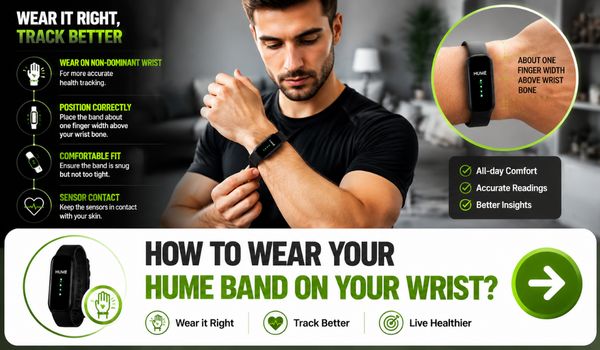
Hume Health specifically recommends wearing the Band snugly but comfortably, just above the wrist bone, so the sensors remain in contact with the skin.
In this guide, we will explain exactly how to wear your Hume Band, which wrist to choose, how tight it should be, where the sensors should sit, how to wear it during exercise and sleep, and what to do if your readings appear inconsistent.
What Is the Hume Band?
The Hume Band is a screenless wearable designed for continuous health and wellness tracking. Instead of functioning like a traditional smartwatch with a display, it is designed to stay on your wrist day and night while collecting physiological signals.
Depending on the model and available features, the Hume ecosystem can provide insights involving metrics such as heart rate variability, sleep, activity, blood oxygen, skin temperature, strain, and recovery.
Hume describes the Band as a device intended for continuous monitoring and wellness insights rather than as a medical device.
When you wear the Band consistently in a suitable position, its optical sensors can maintain contact with your skin while you move, exercise, relax, and sleep. A comfortable fit also makes it easier to keep the Band on for longer periods.
Why Does Proper Hume Band Placement Matter?
You might think that a fitness band can simply be placed anywhere around your wrist. However, sensor-based wearables work best when their sensors maintain stable contact with the skin.
The Hume Band uses optical sensors to collect physiological signals. Hume’s current product information states that the Band uses five LEDs and four photodiodes.
Movement, gaps between the sensor and skin, excessive looseness, and certain skin conditions can influence how well optical sensors receive a signal.
Proper positioning can help you:
- Maintain consistent skin contact
- Reduce unnecessary movement of the Band
- Improve comfort during everyday activities
- Keep the Band in a consistent location while sleeping
- Support more consistent data collection
- Reduce the need to repeatedly reposition the device
Think of it like wearing a pair of glasses. If the glasses sit correctly, you can use them naturally without constantly adjusting them.
The same principle applies to a wearable health tracker: consistent placement makes everyday use easier.
Where Should You Wear the Hume Band?
The ideal position is just above your wrist bone, with the sensors sitting flush against your skin.
The wrist bone is the prominent bony area you can feel near the joint. Rather than positioning the Band directly over this hard area, move it slightly up your forearm.
Hume’s official guidance says the Band should fit snugly and comfortably just above the wrist bone so that the sensors sit flush against the skin.
A simple way to find the correct position
Follow these steps:
- Hold your wrist naturally.
- Locate the prominent wrist bone.
- Move the Band slightly above the bone toward your forearm.
- Place the sensor area against your skin.
- Adjust the strap until it feels secure without being uncomfortable.
- Move your wrist normally to make sure the Band does not slide excessively.
The exact position may vary slightly depending on your wrist shape and comfort. What matters most is maintaining stable skin contact without creating excessive pressure.
Which Wrist Should You Wear Your Hume Band On?
Many people wonder whether the Hume Band should be worn on the left or right wrist. For everyday use, comfort and consistency are important.
If you are right-handed, you may find the left wrist more convenient because your dominant hand performs more movements throughout the day. Likewise, left-handed users may prefer the right wrist.
The important thing is to choose a wrist where you can comfortably keep the Band in place consistently.
Left wrist
The left wrist can be a convenient choice for people who predominantly use their right hand. It can reduce interference with activities such as writing, using a mouse, cooking, or lifting objects.
Right wrist
The right wrist may be more comfortable for left-handed people or those who simply prefer wearing devices on their right wrist.
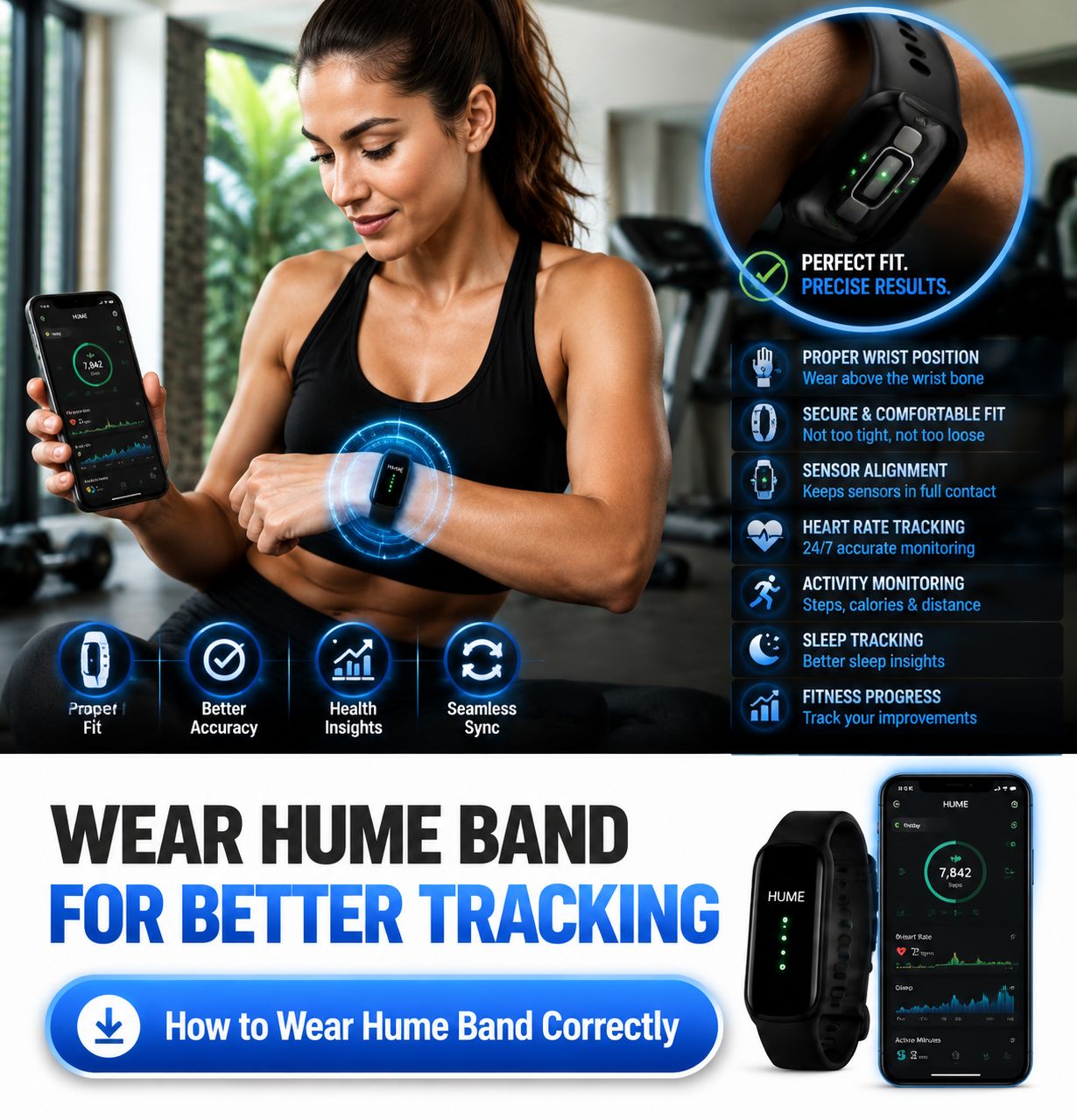
How Tight Should the Hume Band Be?
This is one of the most important parts of wearing a Hume Band correctly.
Your Band should be snug, but not painfully tight.
You want enough contact for the sensors to remain against your skin. At the same time, the Band should not squeeze your wrist or leave significant pressure marks.
If the Band is too loose
A loose Band may:
- Slide around during movement
- Lose consistent skin contact
- Move away from the preferred position
- Feel unstable during exercise
- Require frequent readjustment
If the Band is too tight
An excessively tight Band may:
- Feel uncomfortable
- Leave deep pressure marks
- Become irritating during extended wear
- Make sleeping with the Band less comfortable
The ideal fit
You should be able to move your wrist naturally without the Band constantly shifting. The sensor area should remain against your skin, but you should not feel as though the Band is squeezing your wrist.
Hume describes the desired fit as snug but comfortable, with the sensors flush against the skin.
Step-by-Step: How to Wear Your Hume Band Correctly
If you are putting on the Band for the first time, use this simple process.
Step 1: Choose your wrist
- Select the wrist that feels most comfortable for continuous wear.
- If you are right-handed, you may prefer your left wrist. If you are left-handed, your right wrist may feel more natural.
Step 2: Locate your wrist bone
- Feel along the side of your wrist until you identify the prominent bony area near the joint.
- Do not position the Band directly on top of this area if doing so makes it unstable or uncomfortable.
Step 3: Move the Band slightly upward
- Position the Band just above the wrist bone toward your forearm.
- This gives the sensors a relatively flat area of skin where they can maintain contact.
Step 4: Place the sensors against your skin
- The sensor portion should make direct contact with your skin.
- Avoid wearing the Band over clothing or allowing a significant gap between the sensors and your wrist.
Step 5: Adjust the strap
- Tighten or loosen the strap until the Band feels secure.
- It should stay in place when you move your arm but should not feel restrictive.
Step 6: Test the fit
- Rotate your wrist, bend your hand, walk around, and perform a few normal movements.
- If the Band slides significantly up and down your wrist, adjust it slightly.
Step 7: Keep the position consistent
- Once you find a comfortable position, try to use the same general placement every day.
- Consistency is especially useful when you are interested in tracking changes over time.
Should the Hume Band Sit on the Top or Bottom of Your Wrist?
The most important consideration is stable sensor-to-skin contact, rather than obsessing over a single orientation.
For the standard wrist placement, position the sensor area against the skin and keep it comfortably above the wrist bone.
If you find that a particular orientation causes the Band to move or creates discomfort, adjust it slightly while maintaining good skin contact.
The Band’s design is intended for continuous wear, and Hume says it can be worn comfortably throughout the day and night.
How to Wear the Hume Band During Exercise?
Exercise creates more movement, sweating, and wrist motion, so getting the fit right becomes especially important. Before a workout, check that the Band is secure.
You do not want it so loose that it slides every time you move your arm. At the same time, tightening it excessively is unnecessary and can reduce comfort.
During strength training
Exercises such as weightlifting, push-ups, rows, and resistance training involve frequent wrist movement.
Before starting, make sure the Band is sitting in your normal position. If it moves substantially during a particular exercise, reposition it afterward.
During running or walking
Running creates repetitive arm movement. A secure but comfortable fit can help prevent the Band from bouncing around the wrist.
During cycling
Cycling can involve prolonged wrist positioning and pressure from handlebars. Make sure the Band is comfortable and not pressing uncomfortably against your wrist.
During high-intensity workouts
Sweat generally should not be a major concern for a device designed for continuous wear. Hume’s current specifications describe the Band as IP68-rated and water-resistant to up to 1 meter for up to 2 hours.
Nevertheless, always follow the manufacturer’s current care and water-resistance guidance for your specific model.
How to Wear Your Hume Band While Sleeping?
One of the major advantages of a continuous wearable is that you do not have to remove it every night.
Hume specifically describes the Band as designed for day-and-night wear, and its product materials emphasize sleep tracking as part of the continuous monitoring experience.
For sleep:
- Keep the Band in the same general wrist position.
- Make sure the strap remains comfortable.
- Avoid making it unnecessarily tight.
- Ensure the sensor remains in contact with your skin.
- Adjust it slightly if it causes discomfort while sleeping.
A common mistake is tightening a wearable too much before bed because you are worried it might move.
In reality, the best overnight fit is secure enough to stay in place while remaining comfortable enough that you can forget you are wearing it.
Can You Wear the Hume Band All Day?
Yes. The Hume Band is designed for continuous wear. Hume’s current Band 2.0 information describes it as comfortable enough for non-stop use and says the device can be worn continuously.
The company also lists a battery life of up to 14 days, depending on settings and usage. Continuous wear can be particularly useful because health patterns are not limited to workout sessions.
Your body changes while you:
- Work
- Walk
- Exercise
- Relax
- Eat
- Sleep
- Recover
- Travel
- Perform everyday activities
Keeping the Band on consistently can give the app more information about your daily patterns.

What If You Have Sensitive Skin?
If you have sensitive skin, comfort should be a priority.
Start by wearing the Band for shorter periods if necessary and pay attention to how your skin responds.
Helpful habits include:
- Avoiding excessive tightness
- Keeping the Band and skin clean
- Allowing the area to dry after exposure to water or sweat
- Repositioning the Band slightly when appropriate
- Following the manufacturer’s cleaning instructions
If you develop persistent irritation, pain, swelling, or a significant skin reaction, stop wearing the device and consider speaking with a healthcare professional.
A health tracker should support your routine, not make your skin uncomfortable.
Common Mistakes When Wearing the Hume Band
Even though wearing a smart band sounds straightforward, several small mistakes can affect comfort and consistency.
Wearing it directly on the wrist bone
The wrist bone can create an uneven surface and may make the Band less comfortable.
Try positioning it slightly above the bone.
Wearing it too loosely
If the Band moves significantly during normal activity, it may not maintain consistent sensor contact.
Wearing it too tightly
More pressure does not automatically mean better tracking. A comfortable, secure fit is preferable.
Constantly changing its position
Moving the Band to a completely different location throughout the day makes your routine less consistent.
Ignoring skin irritation
Discomfort should not be considered normal. If your skin is irritated, check the fit and cleanliness and follow appropriate care guidance.
Covering the sensor with clothing
The sensors need access to your skin. The Band should normally be worn directly against the wrist rather than over a sleeve.
Wearing it over a tattooed area when readings are poor
If you notice inconsistent readings and have dense or dark tattoo coverage, try an untattooed area as recommended by Hume.
How Often Should You Reposition the Hume Band?
You do not need to repeatedly adjust the Band if it is already comfortable and secure.
However, minor repositioning can be useful if:
- The Band begins sliding
- Your wrist becomes sweaty
- You notice a weaker sensor signal
- The Band becomes uncomfortable
- You have been wearing it in one position for an extended period
- You have a tattooed area that appears to interfere with sensing
Hume notes that shifting the Band slightly can help if a particular area does not produce a good optical signal.
The goal is not to find one millimeter-perfect location. Instead, aim for consistent, comfortable skin contact.
Cleaning and Caring for Your Hume Band
If you wear a health tracker every day, basic hygiene is important.
Sweat, skin oils, lotions, and dust can accumulate on the Band over time.
A simple routine can help:
- Remove the Band when appropriate.
- Follow Hume’s recommended cleaning instructions.
- Keep the sensor area clean.
- Make sure the Band is dry and comfortable against your skin.
- Clean more frequently after heavy workouts if necessary.
Because the Band is designed for continuous use, regular care can make long-term wear more comfortable.
Always follow the latest manufacturer instructions for cleaning and maintenance rather than using harsh chemicals or cleaning methods that could damage the device.
Does Hume Band Placement Affect Accuracy?
Fit can matter for wearable sensor performance.
Optical sensors need an adequate signal from the skin. If a wearable moves excessively or loses contact, the quality and consistency of collected signals can potentially be affected.
Hume’s product information specifically emphasizes a snug, comfortable fit with the sensors flush against the skin and recommends positioning the Band just above the wrist bone.
However, it is important not to interpret wearable readings as medical diagnoses.
Hume states that the Band is a wellness device rather than a medical device, and its insights should not be treated as a diagnosis or substitute for professional medical advice.
If you have a health concern, use appropriate medical equipment and consult a qualified healthcare professional.
Hume Band Wearing Checklist
Before you start your day, remember this simple checklist:
- Position: Just above the wrist bone.
- Contact: Sensors should sit against your skin.
- Tightness: Snug but comfortable.
- Movement: The Band should not slide excessively.
- Consistency: Keep a similar position from day to day.
- Exercise: Check the fit before intense movement.
- Sleep: Keep it comfortable overnight.
- Skin: Pay attention to irritation or discomfort.
- Tattoos: If readings seem inconsistent, try an untattooed area.
This checklist takes only a few seconds and can make daily use much easier.
Can You Wear the Hume Band in the Shower?
The answer depends on the model and the manufacturer’s current water-resistance specifications.
Hume’s current Band 2.0 specifications state that the device is IP68-rated and water-resistant to depths of up to 1 meter for approximately 2 hours.
Hume says this supports activities such as showering, swimming, and workouts within those specifications.
Even with water resistance, follow the care instructions supplied with your specific Hume Band. Water resistance is not the same as unlimited protection against every type of water exposure.
After prolonged exposure to water or heavy sweating, make sure your skin and Band are comfortable and clean.

What About Wearing the Band Under Clothing?
One advantage of a screenless wearable is that it can be relatively unobtrusive.
The Hume Band is designed to sit flat against the wrist and can be worn under sleeves. Hume describes the Band 2.0’s woven strap as lightweight and breathable and designed for day-and-night use.
If your sleeve is tight around the wrist, however, make sure it is not pushing the Band into your skin or changing its position.
The Band should remain comfortable and maintain good contact with the skin.
How to Get the Most From Your Hume Band?
Correct wearing technique is only one part of getting value from a health wearable.
The other important factor is consistency.
Rather than putting the Band on only when you exercise, consider using it as part of your normal routine if continuous tracking is your goal.
For example:
- Morning: Check your Hume Health app and review your available insights.
- Daytime: Keep the Band comfortably positioned during normal activities.
- Workout: Confirm the fit before exercising.
- Evening: Continue wearing it while relaxing.
- Night: Keep the Band comfortably positioned during sleep.
Over time, this routine can help you observe patterns rather than focusing on a single reading.
Hume’s own calibration guidance explains that the Band learns an individual’s physiological patterns over time, using information such as resting heart rate, HRV, sleep, movement, and temperature responses to establish a personal baseline.
That is one reason consistency can be more useful than constantly changing how and where you wear the device.
Final Thoughts
Hume Band on your wrist is easy once you know the basic rule: place it just above the wrist bone, keep the sensors against your skin, and adjust the strap until it is snug but comfortable.
You do not need to make the Band extremely tight or constantly reposition it. A stable, comfortable fit is the goal.
If you plan to use the Hume Band for continuous health and fitness tracking, consistency is particularly important.
Wear it during everyday activities, exercise, and sleep, as recommended by the manufacturer.
If you notice inconsistent readings, check the fit, sensor contact, wrist position, and whether tattoos or movement may be affecting the optical signal.
Most importantly, remember that the Hume Band is designed to provide wellness insights and trends, not medical diagnoses.
Use its information as one tool for understanding your habits and activity, and consult a qualified healthcare professional for medical concerns.
With the right fit, the Band can become a simple part of your daily routine: put it on, keep it comfortable, and let it collect information while you focus on your day.
.
.
.